Component Batching Systems Selection Guide
Choose component batching systems by comparing your parts, process, rate, access, data needs and required results.
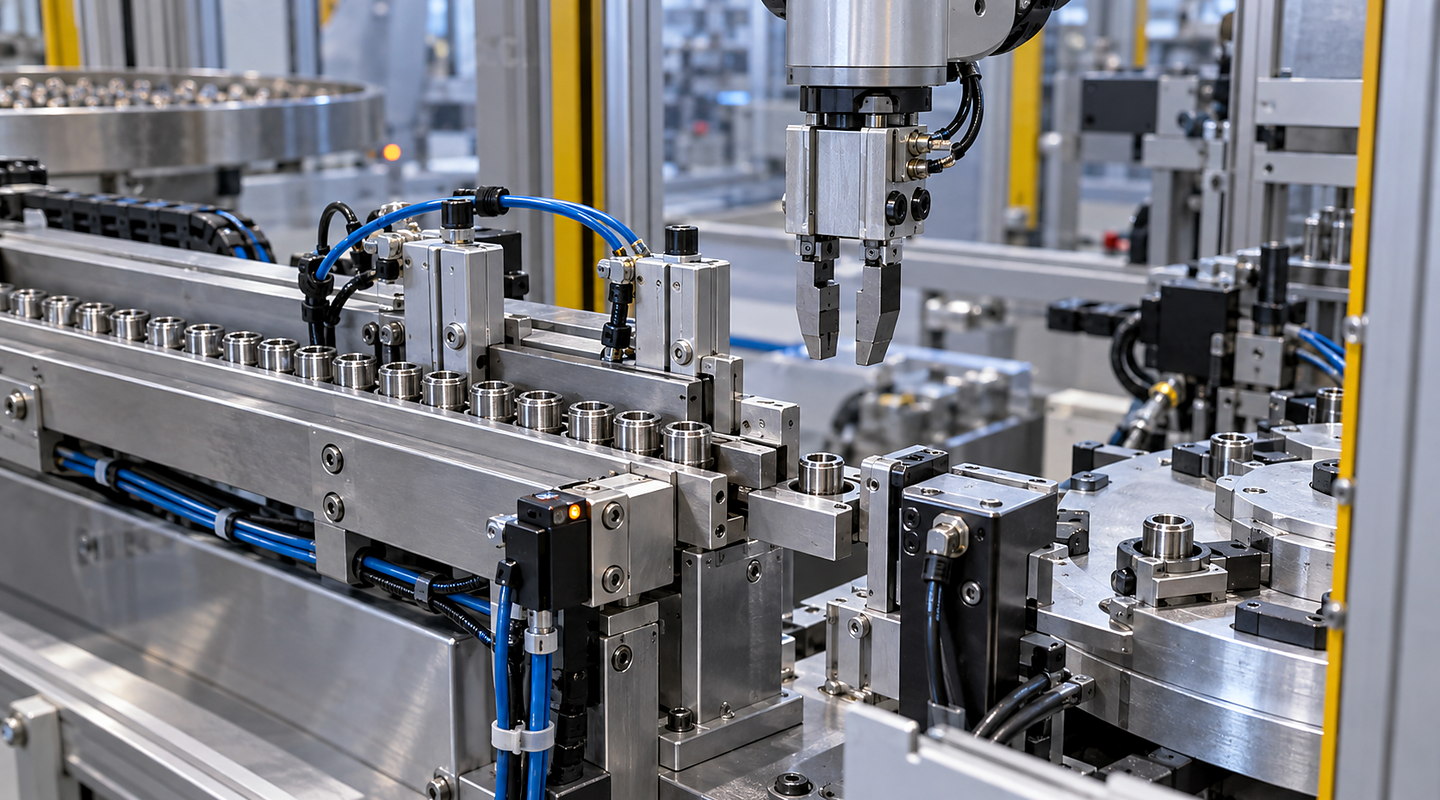
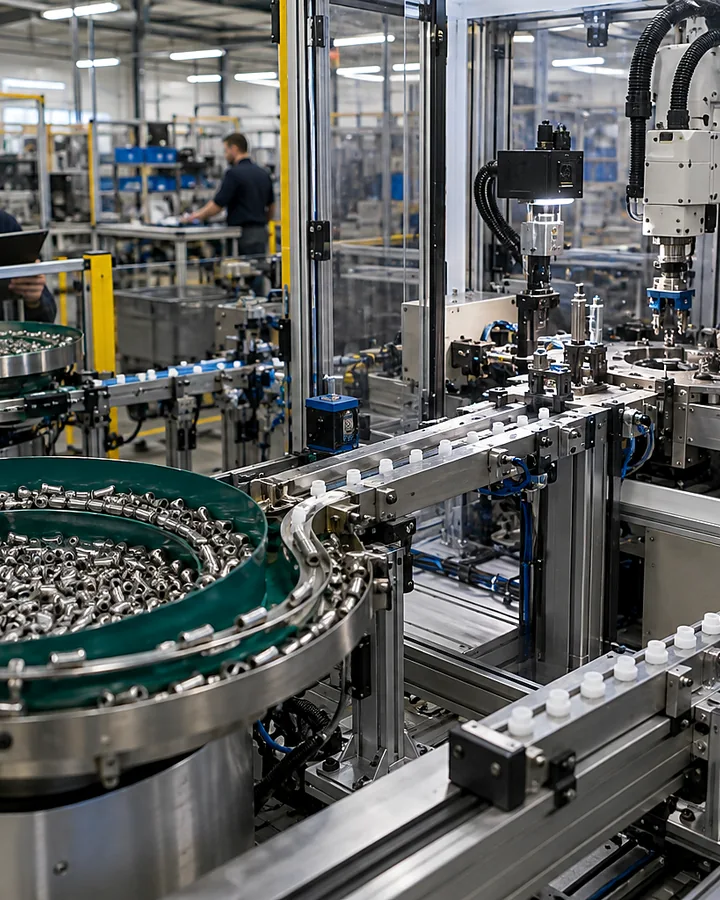
Photographs illustrate component feeding and transfer. Batch identity, quantity and release must be proved using representative parts and the actual receiving process.
Compare component-batching options against the same part range and definition of a complete batch. Review usable delivery, counting or presentation exceptions and the recovery evidence required in representative trials.
For bulk presentation using counted component batch delivery, a short trial that reproduces the difficult condition is often more useful than a long list of nominal specifications.
Compare options in the conditions where they must work — Component Batching Systems
Plan component batching systems around real component variation, bulk condition, orientation, usable delivery rate and the downstream interface. Discuss representative part trials with Sorting Solutions. A useful shortlist should show how every option copes with component geometry and variation for counted component batch delivery and escapement and downstream pick interface.
Discuss your application
Ask every supplier the same questions
| Decision | What to ask | What to check |
|---|---|---|
| Component Geometry and Variation for Counted Component Batch Delivery | What normal range, extreme and rate of change applies to component geometry and variation for counted component batch delivery? | Representative samples and a controlled trial. |
| Surface, Fragility and Entanglement Behaviour | What normal range, extreme and rate of change applies to surface, fragility and entanglement behaviour? | Representative samples and a controlled trial. |
| Bulk Condition and Replenishment Method | What normal range, extreme and rate of change applies to bulk condition and replenishment method? | Drawings, observation and interface measurements. |
| Required Orientation and Delivery Rate | What normal range, extreme and rate of change applies to required orientation and delivery rate? | Drawings, observation and interface measurements. |
| Escapement and Downstream Pick Interface | What normal range, extreme and rate of change applies to escapement and downstream pick interface? | Agreed operating and acceptance records. |
| Jam, Damage and Recovery Acceptance Checks | What normal range, extreme and rate of change applies to jam, damage and recovery acceptance checks? | Agreed operating and acceptance records. |
Include simpler approaches to counted component batch delivery in your shortlist
| Approach | Often suitable when | Watch for |
|---|---|---|
| Component Batching Systems | You need a dedicated solution for a clearly defined duty, product or part range and line interface. | Sample trials must include normal, marginal and supplier-variant components. |
| Flexible Vision-Guided Feeding for Suitable Variable Part Families | Part families vary and representative trials show they can be presented reliably for vision-guided selection. | Prove separation, orientation and usable batch delivery across variants, including overlapping parts and interrupted supply. |
| Manual or Tray Presentation where Bulk Feeding Would Damage Parts or Add Unjustified Complexity | Bulk presentation would damage components or add complexity that the required batches do not justify. | Check how operators or trays preserve part identity, quantity and condition, including interrupted or incomplete batches. |
Pause before choosing when…
- Only perfect or hand-selected examples of bulk presentation using counted component batch delivery are available.
- No one has defined how jam, damage and recovery acceptance checks will be evaluated.
- The normal range for component geometry and variation for counted component batch delivery is described only as “usually fine” but has not been bounded.
- Your operator, cleaning, maintenance or recovery access has not been considered.
- Quoted performance depends on another machine or data source that is not included.